Introduction
If you want to buy, sell, or trade cryptocurrency, you almost certainly need to use a cryptocurrency exchange. Yet for many beginners, exchanges can feel intimidating — screens full of charts, order books, and unfamiliar terminology can make the experience overwhelming.
This guide explains exactly what a cryptocurrency exchange is, how it works, what types exist, and what to look for when choosing one. By the end, you will understand the role exchanges play in the crypto ecosystem and how to use them safely.
What Is a Cryptocurrency Exchange?
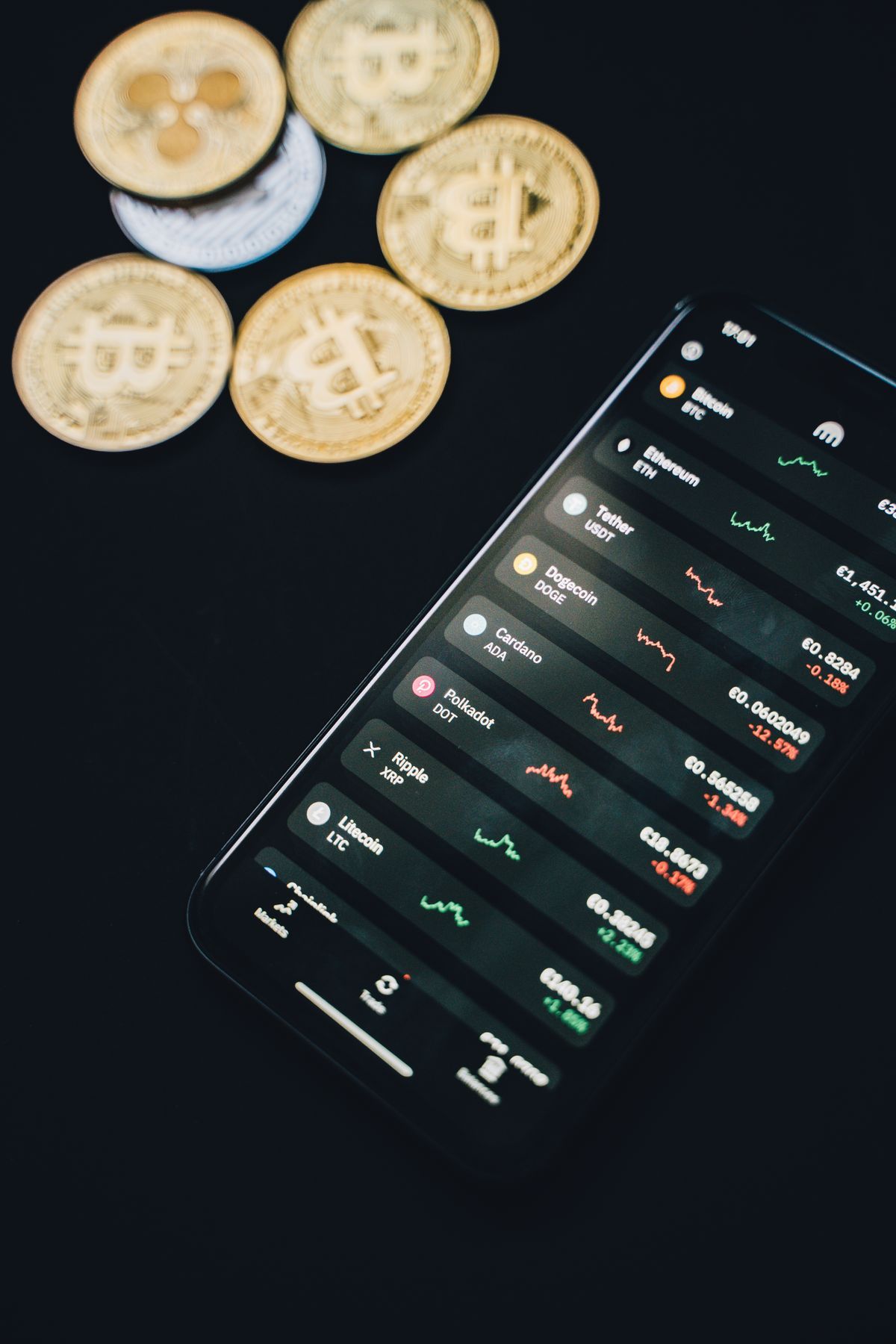
A cryptocurrency exchange is an online platform that allows users to buy, sell, and trade digital currencies such as Bitcoin (BTC), Ethereum (ETH), and thousands of other cryptocurrencies. Exchanges act as marketplaces that connect buyers and sellers, and they make money primarily by charging transaction fees.
Think of a crypto exchange like a stock exchange, but instead of buying shares of companies, you are buying and selling digital currencies. Just as the New York Stock Exchange matches buyers and sellers of stocks, a crypto exchange matches buyers and sellers of cryptocurrencies.
There are two main categories of crypto exchanges:
- Fiat-to-crypto exchanges — allow you to deposit traditional money (like USD or EUR) and purchase cryptocurrency.
- Crypto-to-crypto exchanges — allow you to trade one cryptocurrency for another, but do not support traditional currencies.
Most popular exchanges today support both types of trading.
Key Terms to Know
- Trading pair — Two currencies being exchanged. For example, BTC/USD means you are trading Bitcoin against US dollars.
- Order book — A real-time list of buy and sell orders placed by users, sorted by price.
- Market order — An instruction to buy or sell immediately at the best available price.
- Limit order — An instruction to buy or sell only at a specific price you set in advance.
- Maker — A trader who adds liquidity to the order book by placing a limit order that does not execute immediately.
- Taker — A trader who removes liquidity by placing an order that executes immediately against an existing order.
- Spread — The difference between the lowest asking price and the highest bid price on an exchange.
- KYC (Know Your Customer) — Identity verification process that most regulated exchanges require.
- Liquidity — How easily an asset can be bought or sold without significantly affecting its price.
- Custody — Who holds your cryptocurrency. Exchanges hold your assets in custodial wallets unless you withdraw to your own wallet.
How Does a Crypto Exchange Work?
At its core, a cryptocurrency exchange works by matching buyers with sellers using an order book. Here is a step-by-step breakdown of what happens when you place a trade:
- You create an account and verify your identity (KYC) — Most regulated exchanges require you to submit a government-issued ID and proof of address.
- You deposit funds — You transfer money from your bank account or deposit cryptocurrency from an existing wallet.
- You place an order — You specify whether you want to buy or sell, the amount, and the price (if using a limit order).
- The exchange matches your order — The platform searches its order book for a counterparty who wants the opposite trade.
- The trade executes — When a match is found, the trade is completed. Your account balance is updated to reflect the purchase or sale.
- The exchange charges a fee — A small fee (typically 0.1% to 1.5% of the trade value) is deducted from your transaction.
Types of Crypto Exchanges
Centralized Exchanges (CEX)
Centralized exchanges are run by a company that acts as the middleman between buyers and sellers. The exchange holds your funds on your behalf and manages the trading infrastructure. Examples include Coinbase, Kraken, Binance, and Gemini.
Centralized exchanges are typically easier to use, offer better customer support, and support fiat currency deposits. However, because the exchange holds your funds, you are relying on the company's security and solvency.
Decentralized Exchanges (DEX)
Decentralized exchanges operate without a central authority. Instead of a company holding your funds, trades happen directly between users through smart contracts — self-executing programs on a blockchain. Examples include Uniswap, SushiSwap, and dYdX.
DEXs give users full control of their funds at all times (there is no company holding your cryptocurrency), but they typically require more technical knowledge, may have less liquidity, and usually do not support fiat currency deposits.
Why Crypto Exchanges Matter
Exchanges are the primary on-ramp to the cryptocurrency ecosystem. Without them, most people would have no practical way to buy or sell digital assets. They provide:
- Price discovery — Exchanges aggregate supply and demand to determine fair market prices for cryptocurrencies.
- Liquidity — They connect large numbers of buyers and sellers, making it easy to execute trades quickly.
- Access — They allow ordinary people to participate in the crypto market without needing technical blockchain knowledge.
- Market data — They provide real-time pricing, historical charts, and trading volume data used by investors and analysts worldwide.
Understanding Exchange Fees
Fees vary significantly across exchanges and can meaningfully affect how much you pay for trades. Common fee types include:
- Trading fees — Charged as a percentage of each trade. Fees typically range from 0.10% to 1.50% per trade. Exchanges often charge slightly different rates for makers versus takers.
- Deposit and withdrawal fees — Some exchanges charge fees for moving money in or out, particularly via credit card or wire transfer.
- Spread — Some exchanges (especially those with simpler interfaces) charge no explicit trading fee but build a profit into the gap between buy and sell prices.
- Network fees — When withdrawing cryptocurrency to an external wallet, you may pay a small fee to cover blockchain network costs.
When comparing exchanges, always look at the total cost of a trade — not just the advertised trading fee, but also spreads and withdrawal costs.
Regulation and Compliance
Cryptocurrency exchanges operating in the United States and many other jurisdictions are required to comply with anti-money laundering (AML) and Know Your Customer (KYC) regulations. These rules require exchanges to verify the identity of their users before allowing them to trade.
In the United States, crypto exchanges that deal with securities may fall under Securities and Exchange Commission (SEC) oversight. Exchanges handling commodities-based crypto assets may fall under the purview of the Commodity Futures Trading Commission (CFTC). Additionally, the Financial Industry Regulatory Authority (FINRA) oversees broker-dealers, which can include certain crypto platforms.
The regulatory landscape for cryptocurrency is still evolving. When choosing an exchange, look for platforms that are registered, licensed, and transparent about their regulatory compliance.
Real-World Example: Buying Bitcoin on an Exchange
Imagine Alice wants to purchase $200 worth of Bitcoin. Here is how a typical centralized exchange experience works:
- Alice creates an account on a regulated exchange and completes identity verification by uploading her driver's license.
- She links her bank account and deposits $200.
- She navigates to the Bitcoin (BTC) trading page and places a market order to buy $200 of BTC.
- The exchange finds a matching seller in the order book and executes the trade at the current market price.
- A small trading fee is deducted — for example, a 0.50% fee would cost Alice $1.00.
- Alice's account now shows her Bitcoin balance. She can hold it on the exchange, trade it for other cryptocurrencies, or withdraw it to her own personal wallet.
This example illustrates a straightforward buy. The exchange handled all the complexity of finding a seller, executing the transaction, and updating account balances — Alice just needed to place an order.
Security Considerations
Choosing a secure and trustworthy exchange is critical. Here are the most important security factors to consider:
Best Practices
- Use a reputable, regulated exchange — Choose platforms with a strong security track record, regulatory compliance, and transparent ownership.
- Enable two-factor authentication (2FA) — Always activate 2FA on your exchange account to protect against unauthorized login.
- Use a strong, unique password — Never reuse passwords across multiple platforms.
- Withdraw to a personal wallet — If you plan to hold cryptocurrency long term, consider withdrawing it from the exchange to a hardware or software wallet that you control. This removes counterparty risk.
- Check for insurance or proof-of-reserves — Some exchanges carry insurance on customer funds or publish proof-of-reserves audits to demonstrate solvency.
Common Scams to Avoid
- Phishing sites — Scammers create fake websites that look like real exchanges to steal your login credentials. Always double-check the URL before entering your password.
- Fake customer support — Scammers impersonate exchange support staff via social media or messaging apps to steal your account credentials or funds.
- Unregulated or fake exchanges — Some fraudulent platforms take deposits and then disappear. Only use well-known, established exchanges.
- Pump-and-dump schemes — Coordinated groups artificially inflate a coin's price before selling and leaving later buyers with losses.
The Risk of Exchange Failures
The collapse of major exchanges in the past has shown that even large platforms can fail. When an exchange collapses, users may lose access to their funds. The phrase "not your keys, not your coins" reflects this risk — if you leave cryptocurrency on an exchange rather than withdrawing it to your own wallet, you are trusting the exchange to remain solvent and secure.
Frequently Asked Questions
Is it safe to keep cryptocurrency on an exchange?
It depends on the exchange and your risk tolerance. Reputable, regulated exchanges implement strong security measures, but no exchange is entirely risk-free. For large amounts of cryptocurrency or long-term holdings, many experienced users transfer funds to a personal hardware wallet for greater security.
Do I need to verify my identity to use a crypto exchange?
Most regulated exchanges require identity verification (KYC) before you can deposit fiat currency, withdraw larger amounts, or access full trading features. This is required by AML regulations in most jurisdictions. Some decentralized exchanges allow trading without identity verification, but they typically only support crypto-to-crypto trades.
What fees do crypto exchanges charge?
Fees vary by platform. Trading fees typically range from 0.10% to 1.50% per transaction. Some exchanges also charge deposit fees, withdrawal fees, and may build additional costs into the spread. Always review the complete fee schedule of any exchange before depositing funds.
What is the difference between a crypto exchange and a crypto broker?
A crypto exchange connects buyers and sellers directly via an order book. A crypto broker (or brokerage) acts as the seller itself — you buy directly from the broker at the broker's quoted price, which typically includes a markup. Brokerages tend to be simpler but more expensive per trade.
Can I lose money on a crypto exchange?
Yes, in several ways. The value of cryptocurrencies can decline after you buy them. You can also lose money through trading fees, unfavorable prices, or — in worst-case scenarios — if an exchange fails or is hacked. Cryptocurrency markets are highly volatile, and it is possible to lose a significant portion of any investment.
Are crypto exchanges regulated?
Regulation varies by country. In the United States, some crypto exchanges are regulated as money service businesses (MSBs) and must comply with FinCEN requirements. Depending on the assets they offer, they may also fall under SEC or CFTC oversight. In the European Union, the Markets in Crypto-Assets (MiCA) regulation establishes a framework for crypto service providers. Always verify that an exchange is properly licensed in your jurisdiction.
Conclusion
A cryptocurrency exchange is the gateway to the digital asset ecosystem. It provides the marketplace infrastructure where buyers and sellers meet, prices are discovered, and trades are executed. Understanding how exchanges work — their order books, fee structures, types, and security practices — is fundamental knowledge for anyone entering the world of cryptocurrency.
Whether you choose a centralized exchange for its ease of use and fiat currency support, or a decentralized exchange for greater control, take time to research your options carefully. Compare fees, verify regulatory compliance, and learn about the security features each platform offers.
Most importantly, continue learning before committing funds. Understanding how crypto wallets work, how to store assets safely, and what different cryptocurrencies do will help you make more informed decisions. In cryptocurrency, taking the time to learn is always a worthwhile investment.
Sources
- Bitstamp Learn Center — "How Does a Crypto Exchange Work?" — https://www.bitstamp.net/en-gb/learn/crypto-trading/how-does-a-crypto-exchange-work
- Investopedia — "Crypto Exchanges" — https://www.investopedia.com/crypto-exchanges-5272125
- Kraken Learn — "Kraken vs Binance: Crypto Exchange Comparison" — https://www.kraken.com/learn/kraken-vs-binance
- Kraken — Fee Schedule — https://www.kraken.com/features/fee-schedule
- FINRA — "Crypto Asset Developments" — 2024 Annual Regulatory Oversight Report — https://www.finra.org/rules-guidance/guidance/reports/2024-finra-annual-regulatory-oversight-report/crypto
- Zyphe — "Crypto KYC Compliance 2026: Rules & Exchange Checklist" — https://www.zyphe.com/resources/blog/crypto-kyc-compliance
- Coinbase Learn — Crypto Basics — https://www.coinbase.com/learn/crypto-basics