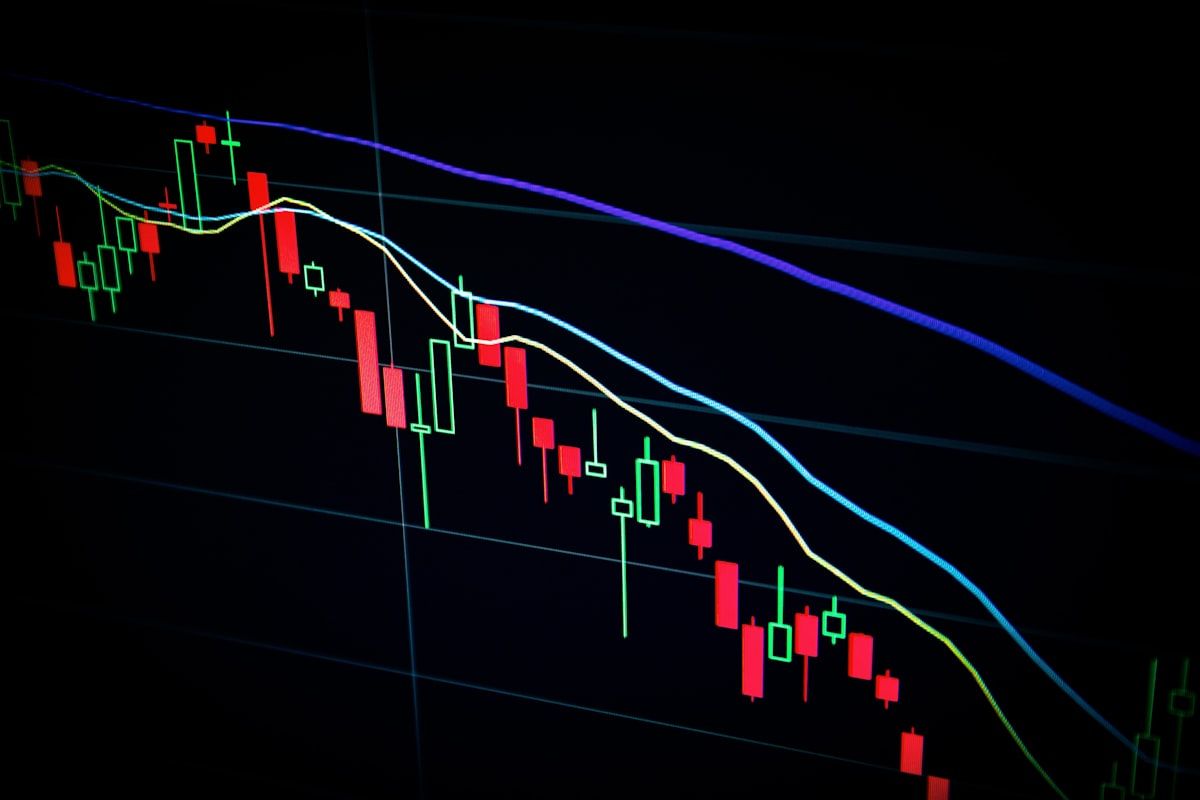
U.S. stocks closed lower Wednesday as President Trump declared the Iran ceasefire "over" at the NATO summit in Ankara, Turkey, triggering a 6%-plus spike in oil prices and fresh fears about Middle East escalation. The Dow Jones Industrial Average briefly touched an all-time intraday high before reversing sharply, while the Nasdaq led declines as tech and semiconductor stocks took the brunt of the sell-off. The Federal Reserve released minutes from its June meeting in the afternoon, adding another layer of uncertainty as investors parsed the committee's divided views on the rate outlook.
Market Performance: Dow Touches All-Time High Before Reversing
The S&P 500 (^GSPC) fell 0.5% to close at 7,503.85, weighed down by selling in technology, healthcare, and consumer staples. Six of the index's 11 sectors finished in negative territory, while the energy sector was one of the few bright spots.
The Dow Jones Industrial Average (^DJI) dropped 130.76 points, or 0.3%, to finish at 52,925.15. In a sign of the day's wild swings, the blue-chip index reached an all-time intraday high of 53,289.30 — a new record — before investors reversed course as oil prices surged and geopolitical headlines mounted. Eighteen Dow components closed higher, while 12 finished in the red.
The Nasdaq Composite (^IXIC) fell 1.2%, losing 302.47 points to close at 25,818.69. Semiconductor stocks bore the brunt of the decline, continuing their recent slide as investors questioned whether AI-driven demand can sustain the elevated valuations built up over the first half of 2026.
The Russell 2000 small-cap index also closed lower, reflecting broader risk-off sentiment across markets.
Treasury yields rose sharply as oil's surge reignited inflation concerns. The 10-year Treasury yield climbed to around 4.59%. WTI crude oil spiked 6.39% to $74.94 per barrel, while international benchmark Brent crude rose more than 6% to nearly $79 per barrel. Gold fell approximately 2.3% to around $4,060 per ounce — a rare sell-off for the traditional safe-haven, as rising yields made it less attractive. Bitcoin dropped 2.2% to about $62,038.
Top Stories: Trump Says Iran Deal Is 'Over,' Oil Spikes 6%
The dominant story of the day was a dramatic escalation in U.S.-Iran tensions. Speaking at the NATO summit in Ankara, President Trump declared that the ceasefire Memorandum of Understanding with Iran is "over." "As far as I'm concerned, it's over," Trump said, adding he considers further negotiations "a waste of time."
The remarks came after U.S. Central Command announced it struck more than 80 Iranian military targets overnight — described as a response to Iranian attacks on three commercial ships near the Strait of Hormuz. The U.S. Treasury also revoked a sanctions waiver that had allowed Iranian oil to be sold on global markets, threatening to tighten world oil supply.
"Renewed tensions in the Middle East have interrupted what had become an increasingly complacent market narrative, prompting investors to reassess geopolitical risks after several weeks of pricing in a smooth path toward de-escalation," said Daniela Hathorn, market analyst at Capital.com. The oil spike raised the immediate concern that higher energy prices could re-ignite inflation — complicating the Federal Reserve's path on interest rates.
FOMC Minutes: Fed Officials Split on Rate Direction
The Federal Reserve released minutes from its June 16-17 policy meeting at 2:00 p.m. ET. The minutes showed that officials were split on the direction of interest rates, even as the committee voted unanimously to hold the federal funds rate steady at 3.50%–3.75%. Traders were watching for clues about the July 28-29 FOMC meeting, where the majority of CME FedWatch participants expect rates to remain on hold.
The minutes highlighted the committee's concern about persistently elevated inflation — May PCE came in at 4.1% year-over-year — alongside the economic disruption stemming from the Middle East conflict. The June FOMC meeting included updated economic projections, with the median forecast calling for 2.2% GDP growth in 2026 and PCE inflation declining from a projected 3.6% in 2026 toward the 2% target by 2028.
Investors are also eyeing Fed Chair Kevin Warsh's congressional testimony scheduled for July 14, the same day the Bureau of Labor Statistics releases June CPI data. That inflation print will be the last major data point before the July FOMC decision.
Samsung Q2 Preliminary Earnings: Record Profit, Stock Falls 7%
Samsung Electronics (005930.KS) reported preliminary second-quarter 2026 earnings that were historic on paper — but investors sold the news. The company projected operating profit of approximately KRW 89.4 trillion ($58.4 billion), a staggering 1,810% increase year-over-year and nearly 19 times what it earned in Q2 2025. Consolidated sales were estimated at roughly KRW 171 trillion, versus KRW 74.57 trillion a year ago.
The record performance was driven by booming demand for AI-related memory semiconductors, including high-bandwidth memory (HBM), server DRAM, and advanced NAND. Yet Samsung's shares fell nearly 7% in Seoul trading. Investors reacted negatively to the company's plan to spend roughly 400 trillion won building a new semiconductor manufacturing hub in southwestern South Korea — a region outside the established chipmaking corridor that would require building utilities and infrastructure from scratch. Bonus provisions tied to the semiconductor division's profits also weighed on the headline figures. A full earnings breakdown by division is scheduled for July 30.
The Samsung selloff rippled through global chip stocks. Micron Technology (MU) fell 4.7% and Advanced Micro Devices (AMD) dropped 6.5%, as the "buy the AI boom" narrative faced continued scrutiny. NVIDIA (NVDA), however, managed to buck the trend, gaining 3.84% on the session.
Biggest Movers: Energy Rises, Tech Slides
Penguin Solutions (PENG) was the biggest winner on the day, surging 26.69% after reporting a significant earnings beat. The company, which provides technology solutions for AI infrastructure, benefited from strong demand for its services.
Chevron (CVX) gained 3.50% and Exxon Mobil (XOM) also rallied as oil's jump boosted energy-sector earnings prospects. Salesforce (CRM) added 3.04% and Johnson & Johnson (JNJ) climbed 3.09%, with defensive and quality names finding buyers as investors rotated away from high-growth tech.
On the downside, Caterpillar (CAT) fell 3.14% and Honeywell International (HON) declined 2.62%, both Dow components that are sensitive to economic growth concerns. Intel Corporation (INTC) dropped more than 2.3% as semiconductor pressure persisted. Navitas Semiconductor (NVTS) tumbled over 9% after a competitor filed a patent infringement lawsuit against the company. Alibaba Group (BABA) jumped 11.50%, one of the session's notable outliers.
Levi Strauss & Co. (LEVI) reported second-quarter fiscal 2026 earnings after the close Wednesday, with the stock falling about 5% in after-hours trading following the release. Shares had closed the regular session down 1.18%.
Economic Data: No Major U.S. Releases Wednesday
There were no major scheduled U.S. economic data releases on Wednesday. The focus remained on the FOMC minutes and the geopolitical situation in the Middle East. The next key economic print is June CPI, due Monday, July 14, at 8:30 a.m. ET. May's CPI registered 4.2% year-over-year, and analysts will be watching closely to see if energy and shelter costs ticked higher given the renewed oil-price surge.
With Q2 2026 earnings season beginning in earnest, FactSet projects S&P 500 companies grew earnings 22% year-over-year in the second quarter — which would mark the second consecutive quarter of above-20% growth. The Energy sector has seen the largest upward revisions to earnings estimates heading into results season.
Tomorrow's Market Calendar: PepsiCo Earnings and Weekly Jobless Claims
Thursday, July 9, is shaping up as a busy day for market watchers:
- PepsiCo (PEP) reports Q2 2026 earnings before the market opens. Analysts estimate EPS of $2.21 on revenue of approximately $23.97 billion. Investors will focus on volume trends amid ongoing consumer spending caution and tariff-related cost pressures.
- Weekly Initial Jobless Claims (8:30 a.m. ET): After June's weaker-than-expected nonfarm payrolls (+57,000), the weekly claims data will be closely watched as an indicator of whether labor market conditions are deteriorating further.
- Federal Reserve speeches: Investors will monitor any Fed commentary for clues on the July 28-29 FOMC decision following the split shown in Wednesday's minutes.
- Delta Air Lines (DAL) reports Q2 earnings on Friday, July 10, before the open. Analysts estimate EPS of $1.53. Investors will focus on guidance given higher fuel costs from the latest oil spike.
- Looking further ahead, the big week for bank earnings begins July 14, with JPMorgan Chase (JPM), Bank of America (BAC), Goldman Sachs (GS), Wells Fargo (WFC), and Citigroup (C) all reporting alongside the June CPI release.
Takeaway: Iran Escalation Clouds the Outlook
Wednesday's session underscored just how quickly geopolitical risk can override fundamental catalysts. The Dow hitting an intraday all-time high and Samsung reporting a near-19-fold surge in profit would normally be bullish headlines — but the sudden deterioration in U.S.-Iran relations overshadowed both. With the Strait of Hormuz at risk and Trump declaring the ceasefire "over," the inflationary implications of sustained high oil prices have returned to the front of investors' minds.
Investors should watch the June CPI print on July 14 as the most important near-term data point — it could tip the balance at the July 28-29 FOMC meeting. For now, the "Great Rotation" away from tech and into value and defensive sectors remains in play, but rising oil prices threaten to complicate even that trade if energy-driven inflation picks back up.