Buying your first stock is one of the most empowering financial decisions you can make. For over a century, the U.S. stock market has delivered long-term returns that have outpaced inflation, savings accounts, and most other asset classes. According to historical data compiled by the SEC and FINRA, long-term equity investors have generally been rewarded for their patience.
That said, investing always carries risk. Stock prices can fall, companies can fail, and no return is ever guaranteed. This guide will not tell you what to buy. Instead, it will walk you through everything you need to know to make your first investment safely and with confidence.
What Is a Stock?
A stock represents a small ownership stake in a company. When a business wants to raise money to grow, it can sell shares of itself to the public through a stock exchange. Each share you buy makes you a shareholder — a partial owner of that company.
How Company Growth Affects Stock Prices
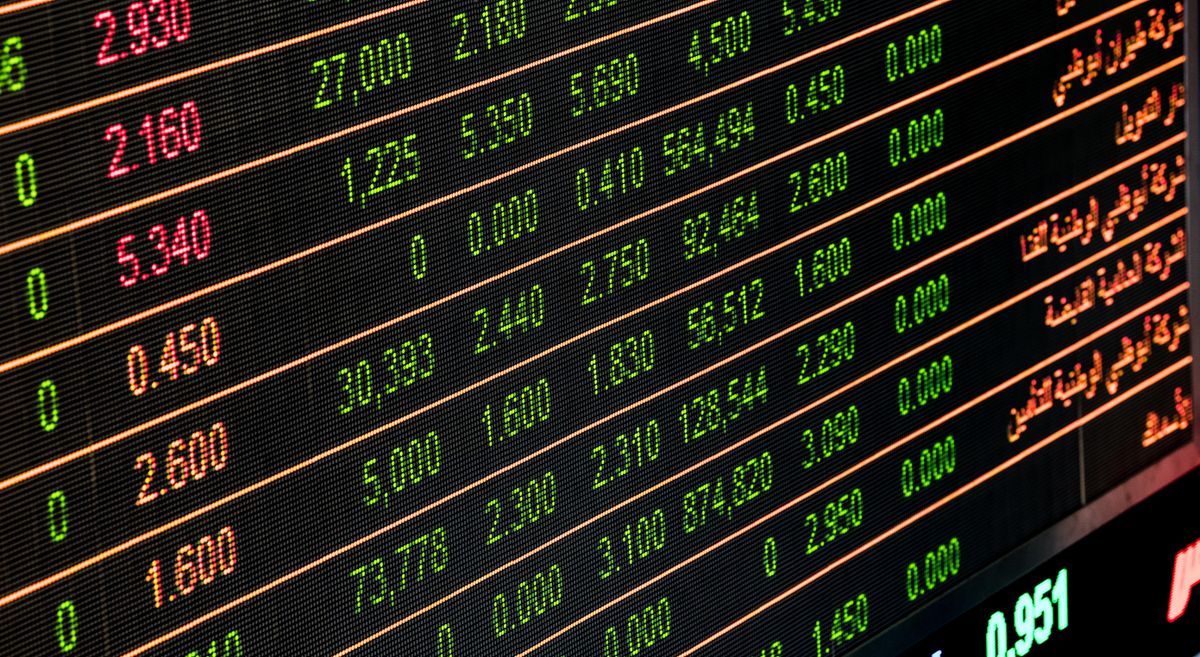
When a company grows — earns more revenue, expands into new markets, or launches successful products — its stock price tends to rise because investors expect higher future profits. When a company struggles, the price often falls.
Stock prices also move based on economic conditions, interest rates, investor sentiment, and global events. This is why prices fluctuate daily, even when nothing dramatic happens inside the company itself.
Capital Gains and Dividends
There are two main ways to make money from stocks. First, capital gains: if you buy a stock at $50 and it rises to $80, you have an unrealized gain of $30 per share. That gain becomes "realized" (and taxable) when you sell. Second, dividends: some companies pay shareholders a portion of their profits on a regular schedule, typically quarterly. Not all companies pay dividends — many fast-growing companies reinvest their profits back into the business instead.
Step 1: Decide Why You're Investing
Before you open a brokerage account, take a few minutes to get clear on your goal. Your reason for investing will shape every decision you make afterward.
- Retirement savings: building wealth over 20–40 years so you can stop working
- Long-term wealth building: growing your net worth over a decade or more
- Saving for a future goal: a house, education, or financial independence
The most important rule for beginners: only invest money you will not need for at least three to five years. The stock market goes up and down in the short term. If you invest money you need next year, you may be forced to sell at a loss during a downturn.
Emotional discipline matters just as much as strategy. Investors who panic-sell during downturns lock in losses that patient investors eventually recover. Decide your goal first, and let that goal anchor your behavior when markets get turbulent.
Step 2: Choose a Brokerage Account
A brokerage account is the account you open with a licensed financial firm to buy and sell investments like stocks and ETFs. Think of it like a bank account, but for investing.
Individual Taxable Brokerage Account
This is the most flexible account type. You can invest any amount, withdraw at any time, and hold virtually any investment. The tradeoff: dividends and capital gains are taxed in the year they occur. There are no contribution limits or income restrictions.
Traditional IRA
An Individual Retirement Account (IRA) is a tax-advantaged account designed for retirement. With a Traditional IRA, contributions may be tax-deductible (depending on your income and whether you have a workplace retirement plan), and your investments grow tax-deferred. You pay taxes when you withdraw money in retirement. For 2024, the IRS contribution limit is $7,000 per year ($8,000 if you're 50 or older). Early withdrawals before age 59½ may incur a 10% penalty.
Roth IRA
A Roth IRA is funded with after-tax dollars, meaning you pay taxes on contributions now. In exchange, your investments grow completely tax-free, and qualified withdrawals in retirement are tax-free as well. Roth IRAs have income eligibility limits — check IRS.gov for current thresholds. The annual contribution limits are the same as the Traditional IRA. Many financial educators consider the Roth IRA one of the best long-term investment vehicles available to young earners.
Well-Known Brokerages
There are many reputable brokerages available to U.S. investors, including Fidelity, Charles Schwab, Vanguard, Robinhood, E*TRADE, and TD Ameritrade (now part of Schwab). Each has different strengths in areas like educational resources, mobile apps, research tools, and account minimums. Research each one to find the best fit for your needs. This article does not recommend any specific brokerage.
Step 3: Fund Your Account
Once your account is open and your identity verified, you need to deposit money before you can invest.
How to Transfer Money
- ACH bank transfer (most common): link your bank account and transfer funds electronically. Typically takes 1–3 business days to settle.
- Wire transfer: faster (often same day), but may carry fees from your bank.
- Check deposit: some brokerages accept mailed or mobile-deposited checks.
Minimum Deposits and Fractional Shares
Many brokerages now have no minimum deposit requirement. You can open an account and start investing with as little as $1 in some cases. Fractional shares allow you to buy a portion of a single share. For example, if a stock is priced at $500 but you only have $50, you can buy one-tenth of a share. Some brokerages like Charles Schwab offer fractional shares at very low dollar minimums, making it easier for new investors to get started without large sums of money.
Step 4: Research a Company
This is where many beginners rush. Taking time to understand a company before buying its stock is one of the most important habits you can build.
Start with the Basics
- What does the company actually do? Can you explain its business in one sentence?
- How does it make money? What are its main revenue streams?
- Is it profitable? Does it earn more than it spends?
- Is revenue growing over time, or is it shrinking?
Key Financial Metrics to Know
- Revenue: total money the company brings in from sales
- Earnings Per Share (EPS): how much profit the company makes per share
- Price-to-Earnings (P/E) ratio: how much investors are paying for each dollar of earnings — useful for comparing companies in the same industry
- Return on Equity (ROE): how efficiently the company uses shareholder money to generate profit
- Debt-to-Equity ratio: how much debt the company carries relative to its equity
- Free Cash Flow: cash left over after operating expenses and capital investments
Where to Find This Information
The best primary source is the SEC's EDGAR database (sec.gov/edgar), where every publicly traded company files quarterly reports (10-Q) and annual reports (10-K). These filings contain detailed financials, business descriptions, and risk disclosures written by the company itself.
You can also review company investor relations pages, earnings call transcripts, and reputable financial news sources. Many brokerages offer free built-in research tools as well. Use analyst ratings as one input among many — not as a final answer.
Competitive Advantages and Industry Trends
Ask whether the company has a durable edge over competitors. Does it have strong brand loyalty, proprietary technology, switching costs, or a cost advantage? Is its industry growing or shrinking? A good company in a declining industry can still be a poor investment.
Step 5: Understand Stock Tickers
Every publicly traded company is assigned a unique stock ticker symbol — a short abbreviation used to identify it on exchanges. When you want to buy a stock, you search for it by its ticker.
- Apple Inc. trades under AAPL on the NASDAQ
- Microsoft Corp. trades under MSFT on the NASDAQ
- Amazon.com Inc. trades under AMZN on the NASDAQ
- Johnson & Johnson trades under JNJ on the New York Stock Exchange (NYSE)
Tickers are standardized and unique. No two companies on the same exchange share a ticker. When you place a trade, entering the correct ticker is the first step to making sure you're buying the right company.
Step 6: Choose an Order Type
When you buy a stock, you don't just say "buy it." You specify how you want the trade to be executed. The two order types every beginner should know are:
Market Order
A market order tells your brokerage to buy (or sell) the stock immediately at whatever the current market price is. Market orders fill quickly and reliably for large, liquid stocks. The tradeoff is that the price you pay might be slightly different from the price you saw a moment ago, especially in fast-moving markets.
Best for: large, highly traded stocks (like Apple or Microsoft) when you want to enter immediately and aren't concerned about a few cents difference in price.
Limit Order
A limit order lets you set the maximum price you're willing to pay. If the stock is trading at $95, you could place a limit order at $93. Your order will only fill if the price drops to $93 or below. The risk: if the stock never hits your price, the order won't execute and you may miss the trade.
Best for: less liquid stocks, volatile markets, or when price precision matters to you.
Beyond market and limit orders, brokerages offer more advanced types like stop-loss and stop-limit orders. These are useful for managing risk once you're more experienced, but not necessary for a first trade.
Step 7: Place Your First Trade
You've done the research, chosen your account, funded it, and picked an order type. Here's how the actual purchase works on most brokerage platforms:
- 1. Navigate to the Trade or Buy/Sell section of your brokerage platform
- 2. Search for the company by name or enter its ticker symbol (e.g., AAPL)
- 3. Select the action: Buy
- 4. Enter the quantity — either a number of shares or a dollar amount (if fractional shares are available)
- 5. Choose your order type: Market or Limit
- 6. If using a limit order, enter your maximum price
- 7. Choose the duration: Day (expires at market close) or Good-Til-Canceled (GTC)
- 8. Review the order summary carefully — verify the ticker, amount, and order type
- 9. Confirm and submit the order
After submission, check your account's Order Status or Activity tab to confirm the trade executed. You should also receive a confirmation email or notification from your brokerage. Save this for your records — you'll need it at tax time.
What Happens After You Buy?
Buying the stock is just the beginning. Here's what to expect once you're an investor.
Price Fluctuations Are Normal
Your stock will go up and down in price every day the market is open. This is completely normal. An unrealized gain or loss simply means the value of what you hold has changed — but you haven't actually made or lost that money until you sell.
Dividends
If you own a dividend-paying stock, you'll receive cash payments in your account on a regular schedule. You can withdraw that cash or reinvest it to buy more shares (called a DRIP — Dividend Reinvestment Plan).
Holding Long-Term and Avoiding Panic
Most successful long-term investors follow a simple rule: buy quality companies, hold them through short-term volatility, and don't try to time the market. Research consistently shows that investors who stay invested through downturns tend to outperform those who sell in fear and try to re-enter later.
Staying diversified — owning stocks across different companies, sectors, and sometimes asset classes — helps reduce the impact of any single holding performing poorly.
Common Beginner Mistakes
- Trying to time the market: predicting short-term price movements is extremely difficult, even for professionals
- Investing money you'll need soon: only invest money you can leave untouched for 3–5+ years
- Following social media hype: viral stock tips are usually late and often wrong — do your own research
- Ignoring diversification: putting all your money in one stock or one sector dramatically increases risk
- Trading emotionally: selling during a crash or chasing a hot stock out of fear or excitement leads to poor outcomes
- Checking prices obsessively: watching your portfolio every hour increases anxiety and tempts you to make impulsive decisions
Tips for Long-Term Success
Dollar-Cost Averaging
Instead of investing a large sum all at once, consider investing a fixed amount on a regular schedule — say, $100 every month. This strategy is called dollar-cost averaging (DCA). It removes the pressure of trying to pick the "perfect" entry point and smooths out the impact of price swings over time. You buy more shares when prices are low and fewer when prices are high.
Diversification
Don't put all your money in one company or one industry. Spread it across multiple holdings. Many beginner investors start with index funds or ETFs (exchange-traded funds) rather than individual stocks, because these instruments automatically hold hundreds of companies at once, providing broad diversification at a low cost.
Reinvest Dividends
If your brokerage offers a DRIP, enabling it means dividends automatically purchase more shares, which means more future dividends — a compounding cycle that builds wealth quietly over time.
Keep Learning
The best investors are lifelong learners. Read company filings, study basic accounting, follow reputable financial publications, and revisit your portfolio's fundamentals periodically. Investor.gov (run by the SEC) and FINRA's investor education resources are excellent free starting points.
Think in Years, Not Days
Short-term price movements are noise. Long-term business fundamentals are signal. The investors who build meaningful wealth typically aren't the ones who check prices every hour — they're the ones who buy quality assets and let time do the work.
Frequently Asked Questions
How much money do I need to buy my first stock?
With fractional shares, you can start with as little as $1 at some brokerages. There's no legal minimum for investing in stocks. That said, starting with at least $50–$100 gives you enough to diversify slightly and keep transaction costs proportionally low.
Can I lose all my money?
If you invest in a single company that goes bankrupt, yes — you could lose your entire investment in that company. This is why diversification is so important. If your money is spread across dozens of companies, the failure of one has a much smaller impact on your overall portfolio. Broad market index funds have never gone to zero in U.S. history, though they have fallen significantly during recessions.
Should I buy one stock or an ETF first?
Many financial educators recommend starting with a broad-market ETF (like one that tracks the S&P 500) before picking individual stocks. ETFs instantly diversify you across hundreds of companies, reduce the risk of a single bad pick, and require less ongoing research. Once you're comfortable, you can allocate a portion of your portfolio to individual companies you've researched.
Are fractional shares worth buying?
Yes, for beginners. Fractional shares let you invest in high-priced companies that would otherwise be out of reach and help you diversify across many holdings with limited capital. They function the same as whole shares in terms of price appreciation and dividends.
How long should I hold a stock?
There's no universal answer, but the general principle for long-term investors is to hold as long as the fundamental reasons you bought the stock remain intact. If the company is still growing, profitable, and competitive, short-term price drops are not a reason to sell. Many experienced investors think in terms of years to decades, not weeks or months.
Conclusion
Buying your first stock doesn't have to be intimidating. The process comes down to a few straightforward steps: understand what stocks are, set a clear goal, open the right account, fund it, do your research, and place a thoughtful trade.
The real edge in investing isn't predicting the next hot stock — it's building consistent habits. Invest regularly, diversify broadly, ignore short-term noise, and give your money time to grow. The stock market has rewarded patient, disciplined investors throughout history, and there's no reason that story has to change.
The best day to start investing is today. The second best day is tomorrow. Pick one, open that account, and take the first step.
Sources
- U.S. Securities and Exchange Commission (SEC) — Investor.gov: https://www.investor.gov/
- SEC EDGAR Database (company filings): https://www.sec.gov/edgar
- FINRA Investor Education Foundation: https://www.finra.org/investors
- IRS Publication 590-A — Contributions to Individual Retirement Arrangements: https://www.irs.gov/pub/irs-pdf/p590a.pdf
- IRS Publication 590-B — Distributions from Individual Retirement Arrangements: https://www.irs.gov/pub/irs-pdf/p590b.pdf
- SEC Day Trading: Your Dollars at Risk: https://www.sec.gov/files/daytrading.pdf
- FINRA — Regulation Best Interest: https://www.finra.org/rules-guidance/key-topics/regulation-best-interest
- Charles Schwab — Roth IRA Contribution Limits: https://www.schwab.com/ira/roth-ira/contribution-limits